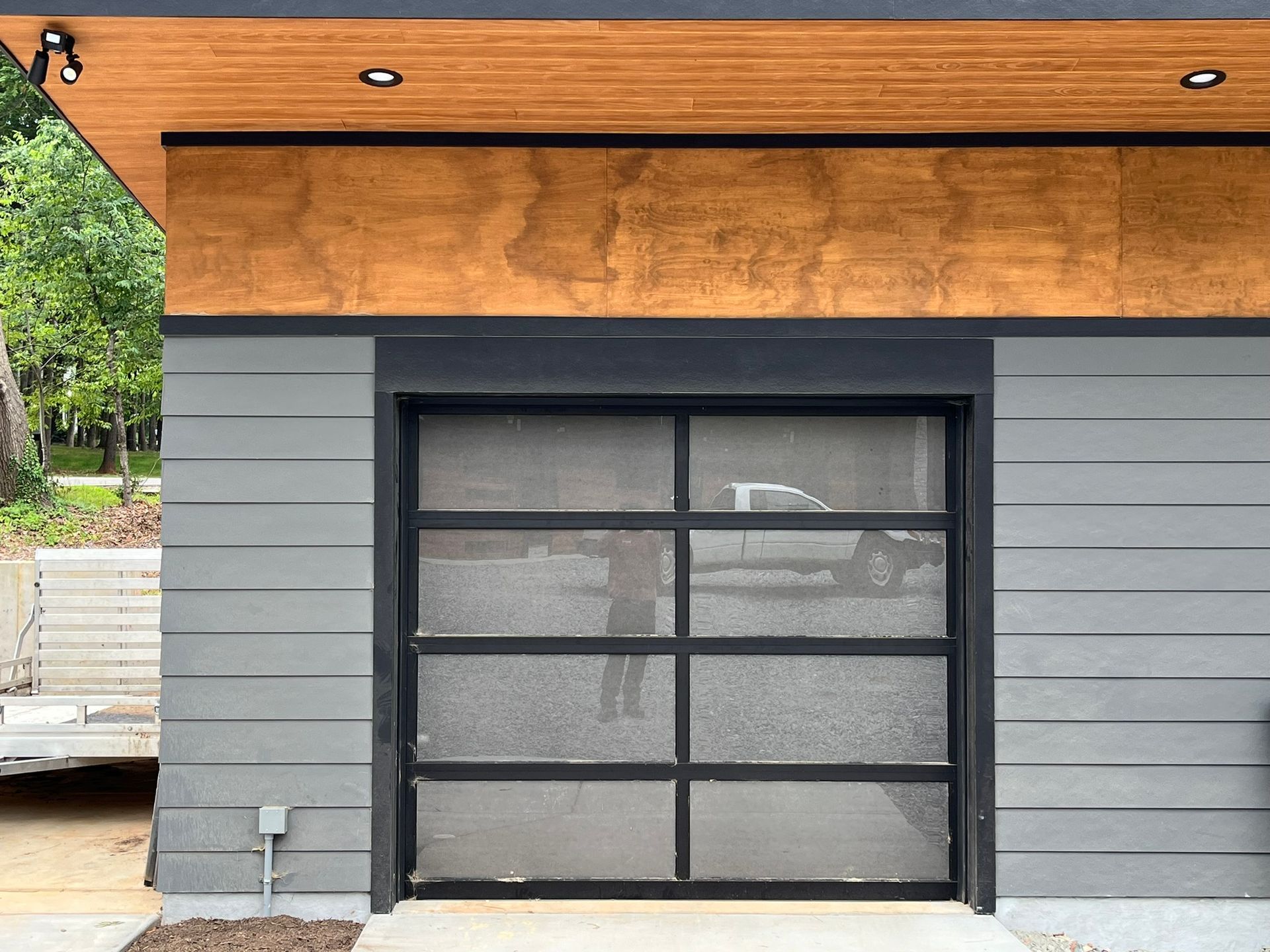

Installation That Fits Your Opening Correctly
Garage Door Installation in Cornelius for replacement projects and new construction requiring proper alignment and safe operation
Garage door installation begins with measuring the rough opening to confirm adequate headroom above the door, backroom behind the header for horizontal track sections, and side clearance for vertical track mounting before selecting a door that physically fits the available space. Pro-Fit Garage Doors handles complete installation from evaluating opening dimensions and selecting appropriate door construction through removal of existing systems, setup of new track assemblies, alignment of sectional panels, opener integration, safety testing, and final operation checks in Cornelius, Gastonia, Lincolnton, and surrounding areas in the Charlotte Metro. The process ensures the door you select matches the structural limitations of your garage, operates safely under spring tension, and seals properly against weatherstripping to prevent air infiltration and moisture entry.
Installation work involves securing track brackets to wall studs at precisely measured intervals so sectional door panels travel vertically without binding, mounting torsion springs or extension spring assemblies matched to door weight and cycle rating, threading lift cables through pulley systems that distribute force evenly across the door width, and connecting opener hardware that automates operation while maintaining manual release capability during power failures. Each step affects how smoothly the door moves and how long components survive daily use.
Contact Pro-Fit Garage Doors to request a garage door installation estimate based on your opening dimensions, insulation requirements, and appearance preferences.
What Happens During the Installation Process
The work begins by removing the old door if replacement is involved, detensioning springs safely to prevent sudden release of stored energy, disconnecting opener mechanisms, and clearing the opening of all hardware before new components arrive. New vertical track sections are leveled and secured to jamb framing, horizontal tracks are positioned to maintain proper door clearance from the ceiling, and roller brackets are attached to each door section before panels are assembled in the opening from bottom to top.
Once installation is complete, the door rises and lowers smoothly through its full travel range without scraping against tracks or jerking to one side, the opener responds immediately to remote and wall button commands, and the door stops at correct open and closed positions without adjustment needed after initial setup. Weatherstripping compresses evenly across the bottom section to seal against the garage floor, and panel joints align without gaps that allow light or air penetration when the door is closed.
The service includes programming opener travel limits so the door knows when to stop moving, testing photo-eye sensors to verify they halt and reverse door travel when the beam is interrupted, checking auto-reverse force settings to ensure the door retracts when meeting resistance, and demonstrating emergency release operation so you can manually open the door during power outages. These final checks confirm the installation meets current safety standards for automated residential and commercial overhead door systems.
What to Know Before Installing a New Door
Installation projects involve decisions about door construction, insulation values, window placement, and opener compatibility that affect long-term performance and energy efficiency.
What measurements determine whether a specific garage door will fit my opening?
The critical dimensions include the width and height of the rough opening, the distance from the top of the opening to the ceiling or nearest obstruction above, the depth of space behind the header where horizontal tracks extend when the door opens, and the clearance on each side of the opening for vertical track mounting and spring hardware.
How does insulated door construction affect garage temperature and energy costs?
Insulated doors use foam cores between steel or aluminum skins to reduce heat transfer through the door surface, maintaining more stable interior temperatures that lower heating and cooling demands when the garage connects to conditioned living spaces or contains temperature-sensitive storage.
When should I replace the garage door opener during installation?
Opener replacement makes sense when the existing motor lacks sufficient lifting capacity for the new door weight, when it predates current safety standards requiring auto-reverse and photo-eye sensors, or when you want features like battery backup, smartphone control, or quieter belt-drive operation unavailable in older chain-drive models.
What factors affect garage door installation timelines in Cornelius?
Custom door orders require manufacturing lead time before installation can begin, while standard sizes often ship within days and allow faster project completion once your opening has been measured and the appropriate door construction selected.
Why does proper installation matter for long-term door performance?
Correctly leveled tracks prevent uneven roller wear, precisely tensioned springs balance the door without overloading the opener motor, properly aligned panels seal weatherstripping evenly across the threshold, and accurate limit settings stop the door at intended positions without constant readjustment as components settle during initial operation.
Pro-Fit Garage Doors provides clear guidance on door selection and careful installation workmanship without pushing unnecessary upgrades. Call (980) 281-0977 to discuss your project requirements and schedule installation that delivers dependable operation from the first use.